
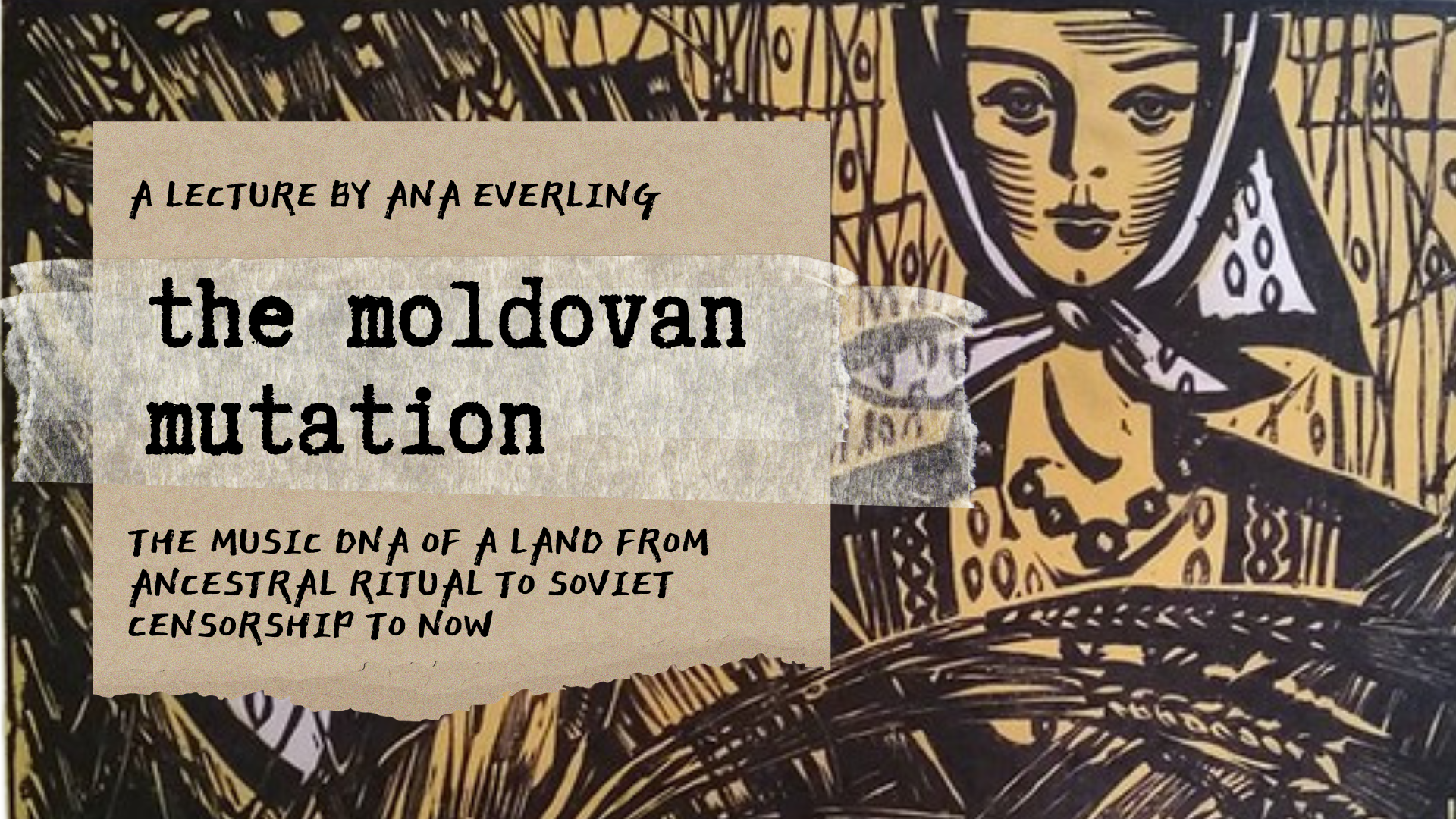
"La Maria sub cerdac" performed by Liubomir Iorga at pear leaf ("frunză de păr "). Romanian traditional folk song ("doină") from Moldova, Basarabia area. © Fabris, 2013

A Highway Between Empires
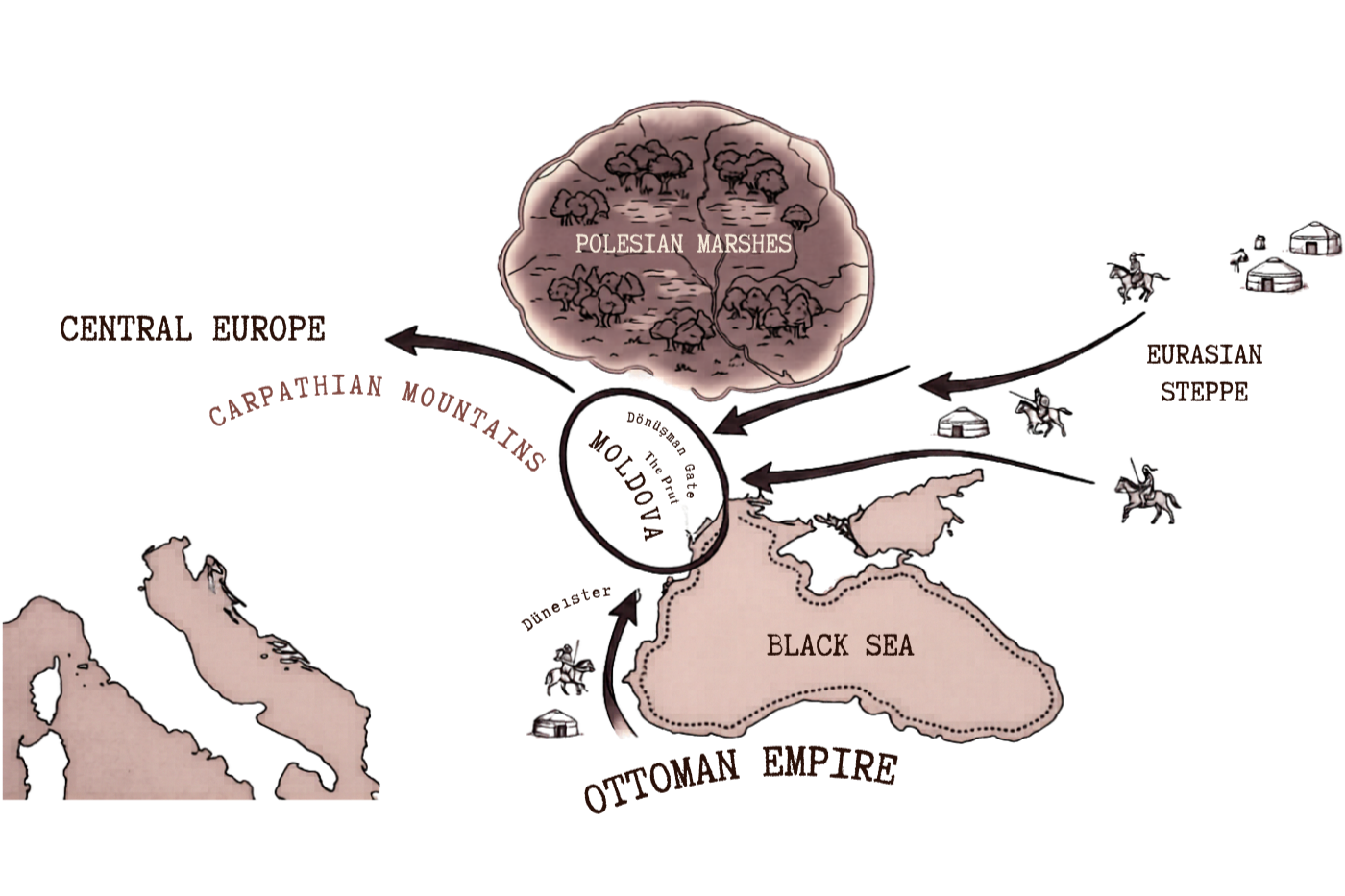
In the "Moldavian Corridor" - a geographical wedge trapped between the Latin West and the Eurasian Steppe - music was never just art; it was a sonic blueprint of resistance. Drawing from authentic field recordings collected from Moldovan villages, vocalist and visual artist Ana Everling tracks the forensic evolution of a sound that refused to be erased. Through raw audio samples and archival imagery, this presentation deconstructs the journey of a forest-born culture as it collided with the nomadic "highway," endured the industrial grinding of Soviet censorship, and weathered the identity crises of the modern era. We move from the primitive vibration of a fish scale to the complex, asymmetrical rhythms of a resilient hybrid identity.

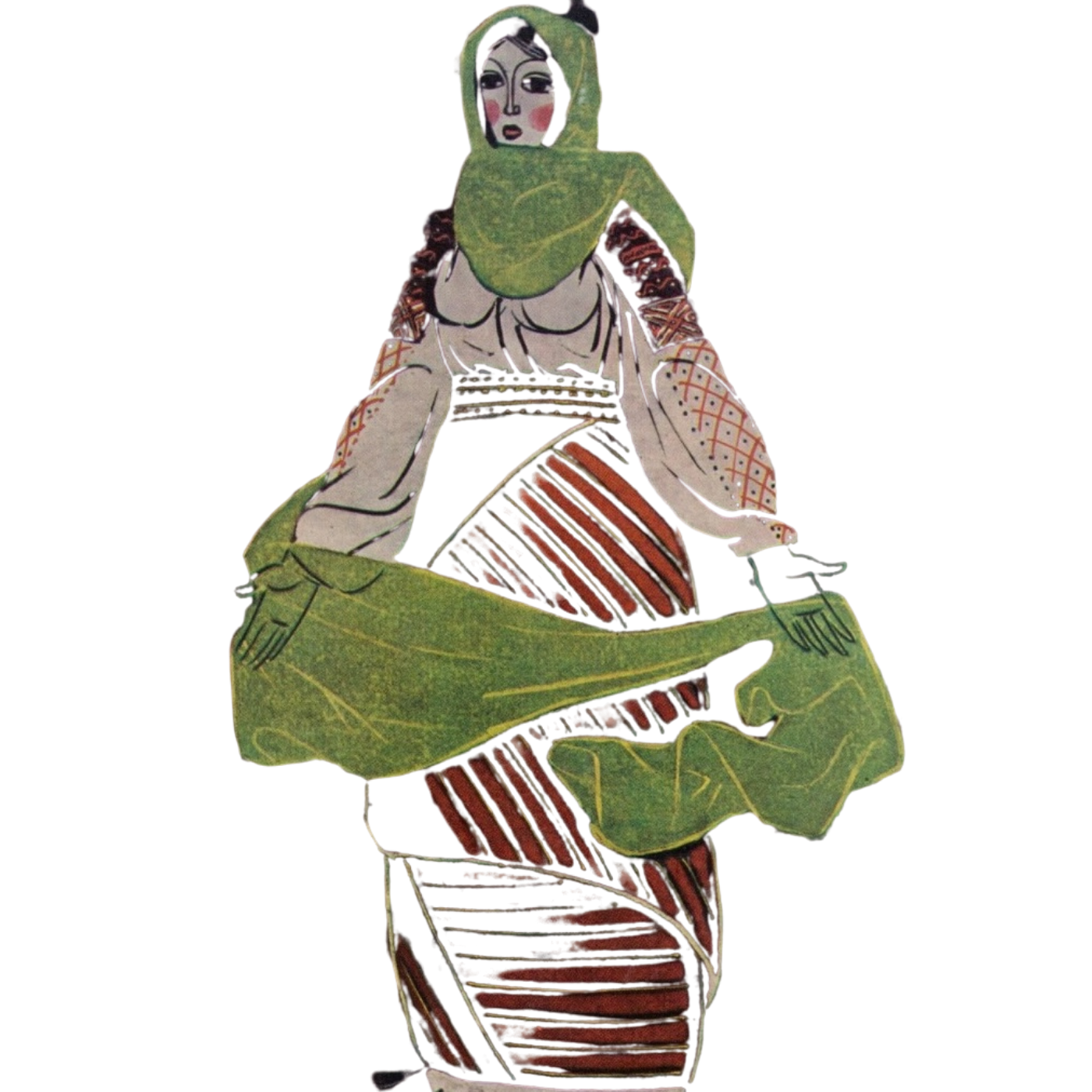
Miorița (The Little Ewe)

Miorița is the spiritual of the Moldovan and Romanian soul. It’s considered epic because of how it handles the most terrifying human experience: the certainty of death.

The story is simple: three shepherds: one Moldavian, one Transylvanian, and one Vrancean. They are moving their flocks. The latter two grow jealous of the Moldavian's wealth (his beautiful sheep and horses) and plot to kill him at sunset.

A "clairvoyant" ewe (the Miorita) overhears the plot and warns her master. Instead of arming himself or running away, the Moldavian shepherd gives the sheep his final instructions for his "burial."

"The most profound message of the ballad lies in the shepherd's will to change the meaning of his destiny, to transmute his misfortune into a moment in the cosmic liturgy, by transfiguring his death into "mystical nuptials," by summoning the Sun and Moon to attend him, and projecting himself among the stars, the waters, and the mountains." - M. Eliade