
"La Maria sub cerdac" performed by Liubomir Iorga at pear leaf ("frunză de păr "). Romanian traditional folk song ("doină") from Moldova, Basarabia area. © Fabris, 2013
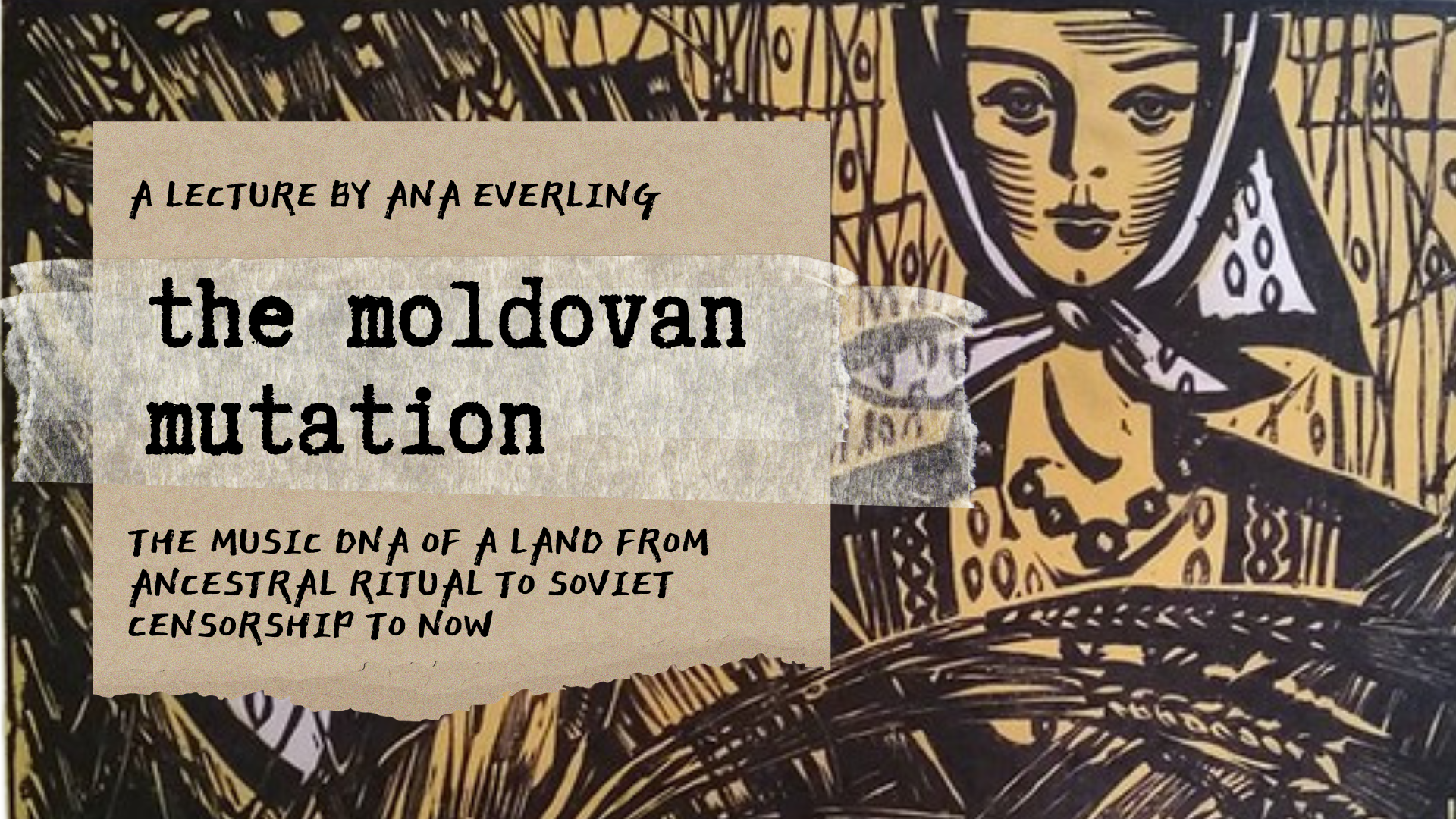
In the "Moldavian Corridor" - a geographical wedge trapped between the Latin West and the Eurasian Steppe - music was never just art; it was a sonic blueprint of resistance. Drawing from authentic field recordings collected from Moldovan villages, vocalist and visual artist Ana Everling tracks the forensic evolution of a sound that refused to be erased. Through raw audio samples and archival imagery, this presentation deconstructs the journey of a forest-born culture as it collided with the nomadic "highway," endured the industrial grinding of Soviet censorship, and weathered the identity crises of the modern era. We move from the primitive vibration of a fish scale to the complex, asymmetrical rhythms of a resilient hybrid identity.

A Highway Between Empires
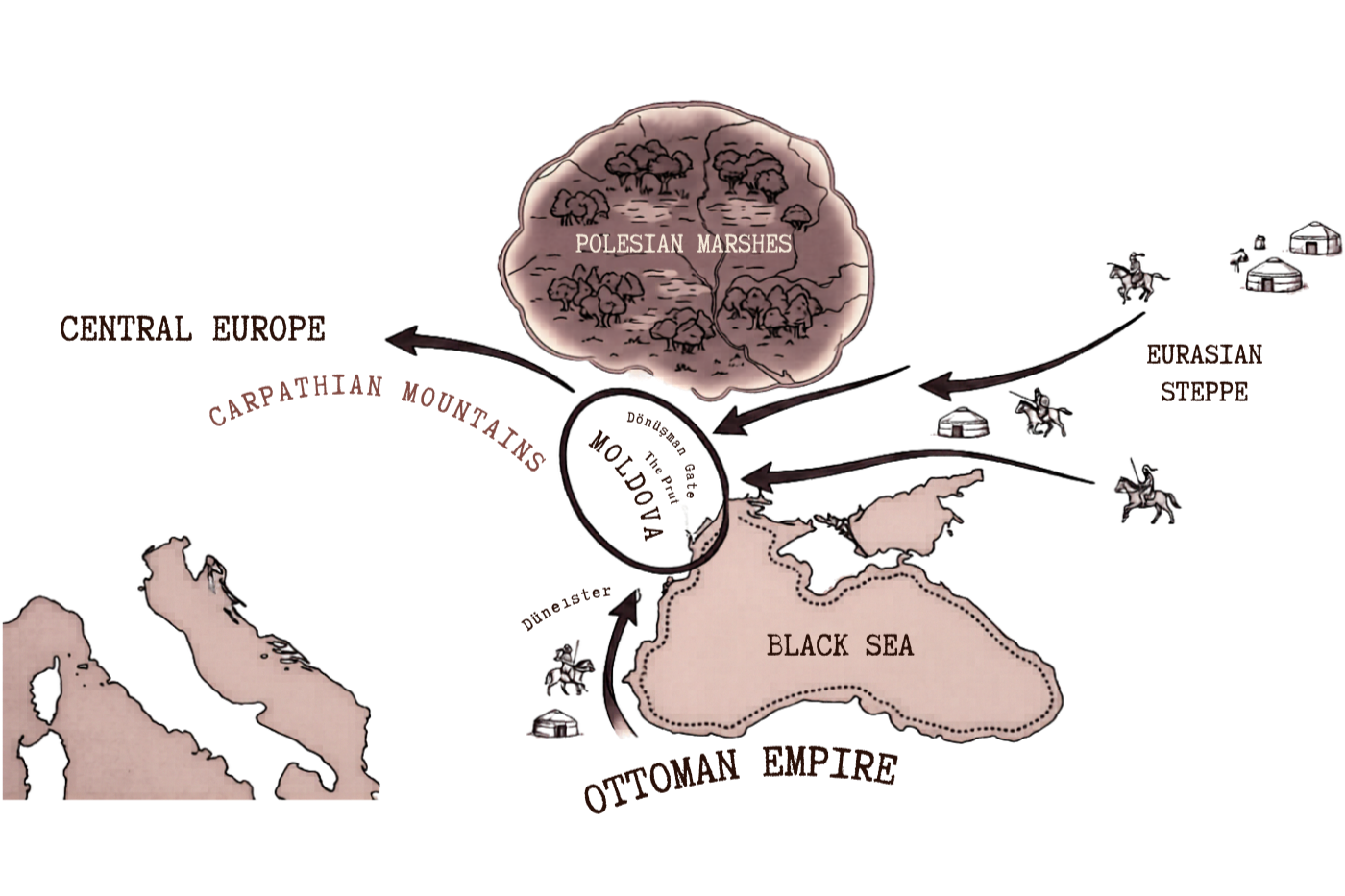
Moldova’s history is defined by its position in a geological bottleneck known as the Moldavian Gate, a narrow strip of manageable land squeezed between the impassable Pripet Marshes to the north, the Black Sea to the south, and the jagged Carpathian wall to the west. This flat corridor between the Prut and Dniester rivers functioned as a strategic funnel, acting as the primary land bridge for any power moving from the Eurasian Steppe into the heart of Europe.
Because this "gap" was the path of least resistance, the local culture became a sonic laboratory of the road; without the protective isolation of mountains, the music evolved into a high-frequency, nervous hybrid—a mutation of Byzantine scales and nomadic rhythms forced to survive the constant friction of shifting empires.